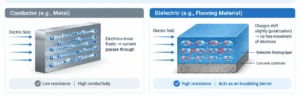
Dielectric Insulation Coating for Industrial Floors & Metal Surfaces
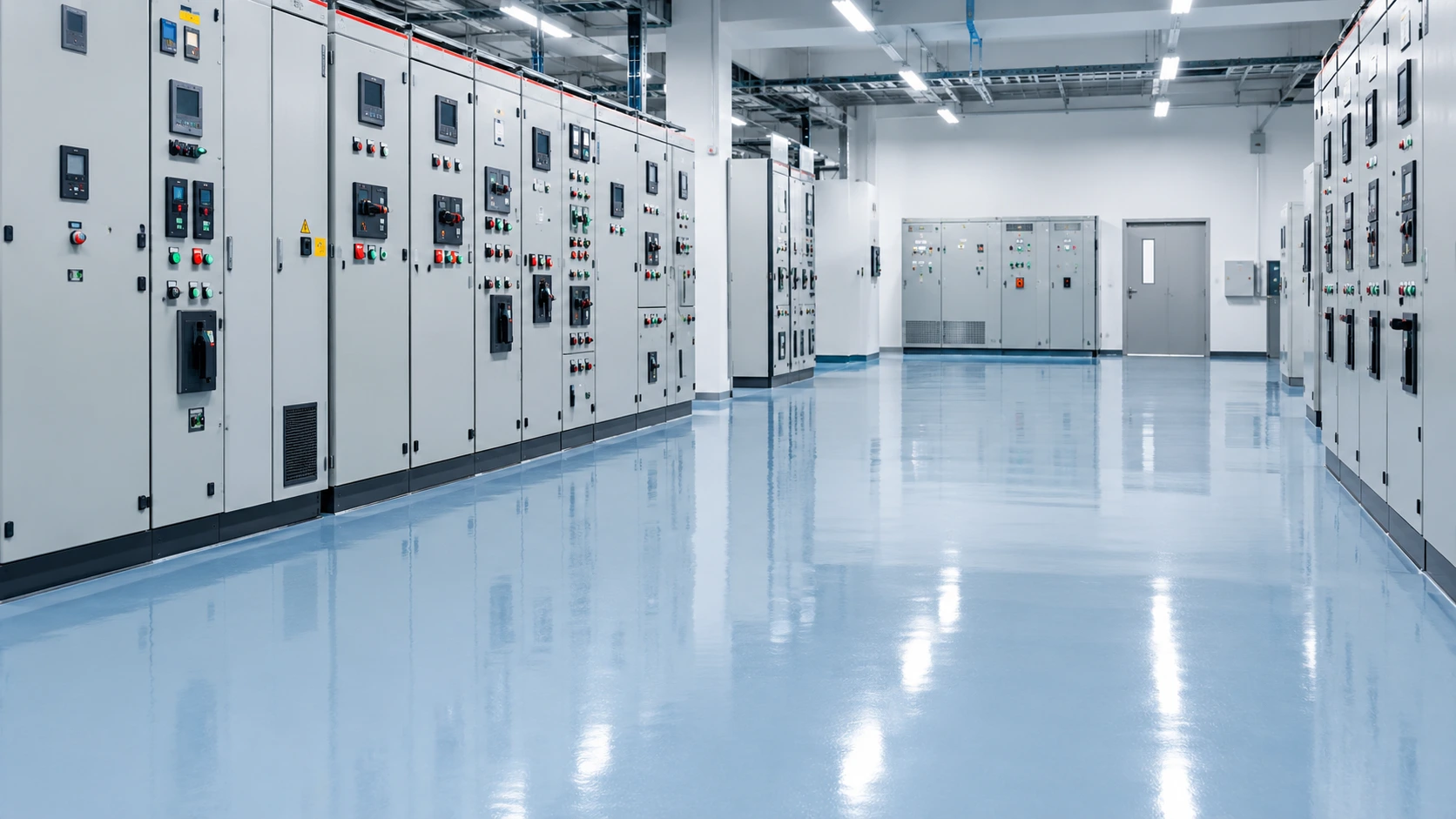
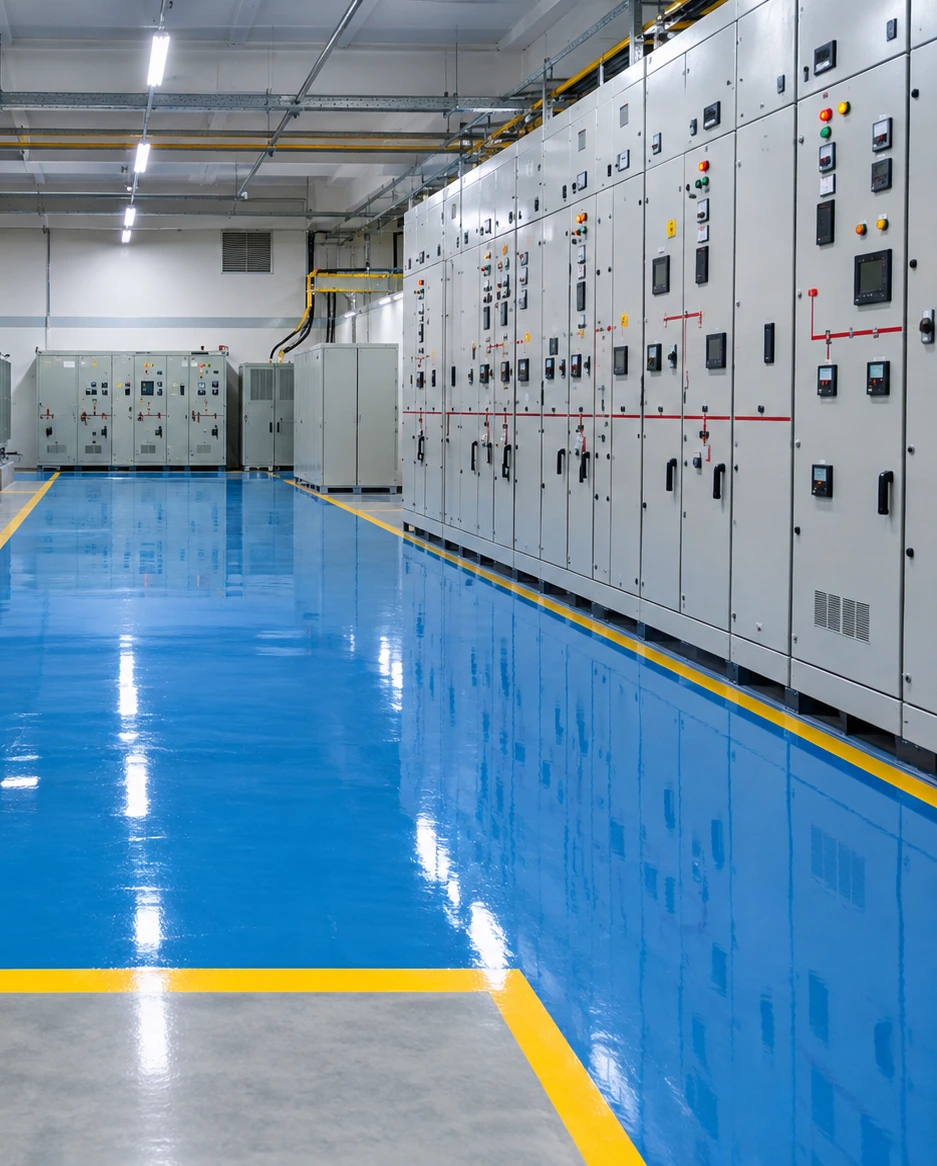
In industrial facilities where there are electrical hazards, equipment, floor and metal parts are used in the environment of areas that must be electrical insulated. The materials used in a transformer room, switchgear area, control panel room, electrical laboratory, and power distribution room should be of the proper type to have the desired electrical and mechanical characteristics. Electrogard Dielectric insulating coating by Floorkrete is a specially formulated coating solution to be used where electrical insulation and surface protection are crucial. The range comprises ELECTROGARD ELI, a two-part epoxy floor coating (solvent-free), and ELECTROGARD SLI, a single-part dielectric surface coating.
Why do industrial facilities need Dielectric Insulation Coatings?
The Electrogard dielectric insulation coating can offer an insulating layer on top of an approved substrate with added features of abrasion resistance, adhesion, and cleaning properties. Rubber flooring is most suitable for industrial floors, metal surfaces, and electrical rooms where application-specific requirements are well-documented and when the compatibility of the rubber floats on the specific substrate is known.
The principal technical considerations include:
The coating must have documented Dielectric paint properties appropriate to the intended application. Both Electrograd ELI and SLI coatings have a stated dielectric strength of more than 3,000 V per 25 microns in their product descriptions.
Applied film thickness directly affects the intended breakdown-voltage performance. The coating must be applied uniformly within the specified thickness range. Pinholes, voids, cracks, and incomplete coverage can compromise insulation performance by creating potential weak points in the protective layer.
Volume resistivity is an important electrical property used to characterize a material’s resistance to current flow through its volume. The ELECTROGARD SLI satisfies the volume-resistivity requirement under IS 10026.
Breakdown voltage is a critical selection parameter for electrical insulation coatings. The ELI range includes variants rated at 5 kV, 11 kV, 22 kV, 33 kV, and 53 kV, while the SLI range includes SLI-5 and SLI-11, rated at 5 kV and 11 kV, respectively.
Compressive strength indicates the coating system’s ability to withstand compressive loading. The ELECTROGARD has a compressive strength of more than 60 N/mm². This property is relevant when evaluating the coating for industrial floors exposed to equipment, operational loads, and routine movement of materials.
Flexural strength describes a material’s resistance to bending stresses. ELECTROGARD has a specified flexural strength of 40 N/mm². This parameter can help inform the assessment of the coating system. The coating’s performance also depends on substrate condition, film thickness, and installation quality.
Strong adhesion helps the coating remain bonded to the substrate during service. ELI specifies a bond strength greater than 4.0 MPa, while SLI records no peeling under ASTM D3359. Proper surface preparation, removal of contaminants, and suitable mechanical profiling are essential considerations for achieving the intended coating performance.
- Environmental resistance:
ELECTROGARD ELI is suitable for applications up to 200°C and resistant to abrasion, alkalis, solvents, and specified acid exposure, including 98% sulfuric acid. SLI is UV-resistant for exterior applications, with a temperature resistance of at least 90°C.
- Curing and application conditions:
ELI is a two-component epoxy coating with a stated pot life of 30 minutes and a touch-dry time of 2–5 hours. SLI is a single-component coating with specified touch-dry times of 15 minutes for SLI-5 and 25 minutes for SLI-11
Electrogard Insulation Coating for Dielectrics: How to know the product range
There are two coating systems; that differentiate the ELECTROGARD Dielectric insulation coating applications.
Electrogard ELI is a 2-component epoxy floor coating.
ELECTROGARD ELI is a solvent-free, self-smoothing dielectric insulation epoxy coating for floors, in two parts.
Technical properties:
- High level of electrical strength and insulating ability.
- The bond plays a role, with a strength of over 4.0 MPa.
- Shore D hardness of 80–85.
- Compressive Strength > 60 (N / mm²).
- Flexural strength around 40 N/mm².
- Resistance to abrasion
- The porosity is less than 0.1%, and the dielectric strength is more than 3,000 volts per 25 microns.
Electrogard SLI is a single-component coating that is applied by electrostatic spray painting
ELECTROGARD SLI is a one-part surface coating system used for surface protection and dielectrical insulation. If a dielectric paint for metal is specified, verify that the chosen coating is suitable for the particular metal surface and the electrical and environmental factors involved in the project.
The SLI range has the following characteristics:
- Dielectric strength greater than 50 kV/mmThe adhesion performance is specified by ASTM D3359, where the performance is described as no peeling.
- Lower than 0.08 for the ASTM D150-18 test.
- Heat resistance down to 90°C.
- Humidity resistance test (as per ASTM D2247).
- Salt Spray Resistance according to ASTM B117.
- Wrote the reports for tracking-resistance and accelerated-weathering tests.
The main difference between Electrogard SLI and ELI is in their formulation and application
SLI is a single-component, UV-resistant coating that is not mixed like a two-component epoxy coating; ELI is a two-component epoxy coating with increased chemical resistance and mechanical durability for more challenging industrial applications. The optional items associated with metal surfaces exist as a group of coatings called ‘dielectric insulation coatings for metal ‘, which are chosen for their electrical insulation and surface-protective properties for the purpose of coating on a compatible substrate.
Technical considerations for Electrical rooms (Dielectric Epoxy Flooring)
When choosing a dielectric epoxy flooring, the electrical properties of the floor should be considered, as well as the mechanical properties. Electrical rooms can be large equipment installations, maintenance access areas, cable trenches, and dust- or regularly splash-chemical-polluted areas. Consider the following factors: required breakdown voltage, film thickness, mechanical loading, chemical exposure, and substrate condition, rather than a general product label, when choosing the best electrical room floor paint for a project.
Selecting the appropriate coating thickness
The ELI lists five variants with different breakdown-voltage values and corresponding thickness requirements.
| Product variant |
Listed breakdown voltage |
Required thickness |
ELECTROGARD
ELI-500 |
5 kV |
100–150 microns |
ELECTROGARD
ELI-1100 |
11 kV |
300–400 microns |
ELECTROGARD
ELI-2200 |
22 kV |
700–800 microns |
ELECTROGARD
ELI-3300 |
33 kV |
1,100–1,300 microns |
ELECTROGARD
ELI-5300 |
53 kV |
1,900–2,100 microns |
The SLI range provides two specified voltage ratings
| Product variant |
Listed breakdown voltage |
Required thickness |
| ELECTROGARD SLI-5 |
5 kV |
100–150 microns |
| ELECTROGARD SLI-11 |
11 kV |
250–350 microns |
Conventional and quality control of dielectric coatings
The criticality of the equipment and exposure conditions, and the requirements of the project, should determine the development of an inspection programme.
Some of the common inspection processes are the following:
- Assessment of substrate and cracks, peeling and blistering by visual means.
- Checking for repeated abrasion areas.
- Where appropriate, make film-thickness measurements.
- Assessment of surface contamination and cleaning practices.
- Review of repairs and coating deterioration.
Conclusion
To achieve an optimal blend of electrical insulation, mechanical strength and environmental attributes, a proper choice of coating must be made for the dielectric insulation. Floorkrete’s ELECTROGARD line of inks is engineered for applications in high-traffic industrial environments while also offering convenient mobility and UV-resistant protection with their inks on the SLI, single-component line. When putting a dielectric insulation coating over a metal substrate for a project, be sure to consider compatibility of the substrate with the coating, as well as dielectric strength, film thickness, and exposure to service conditions. Assessment of the above-mentioned factors leads to the selection of the right coating in electrical or switchgear rooms, transformer rooms, industrial floors, and other areas.
FAQ