Dielectric Insulation Floor Coatings vs Rubber Mats: What’s the Better Choice for Electrical Room Floors?
In industrial facilities, commercial buildings, substations and manufacturing plants, electrical rooms are one of the most important safety-critical areas. From switchgear rooms and electrical control rooms to power distribution areas, floor insulation is an important consideration in an overall electrical safety strategy.
For years, rubber insulating mats have been used in front of electrical panels and switchgear. When chosen, maintained and used in compliance with the appropriate specifications they offer a removable insulating layer. But industrial plants must also take practical issues into account like mat turnover, bare floor space, cleaning, replacement and inspection.
It has motivated engineers, consultants and facility managers to consider dielectric insulation floor coatings as an alternative for appropriate electrical work areas.
Floorkrete is a product of the Multichem Group which is a manufacturer of a range of dielectric insulation flooring products for special electrical insulation use. The range consists of epoxy based Electrogard ELI, resin based Electrogard SLI and ElectroScreed dielectric insulation screed.
What Is Dielectric Insulation Flooring?
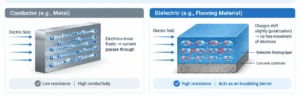
Dielectric insulation floor coatings are coatings specially formulated to offer electrical insulation over a limited floor area. An electric Insulation Coating system is not like a normal decorative or industrial floor paint; it has electrical characteristics and needs to be assessed for electrical characteristics and suitability for the operating environment.
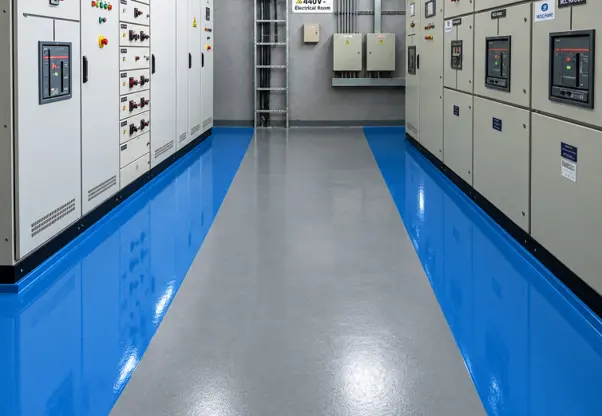
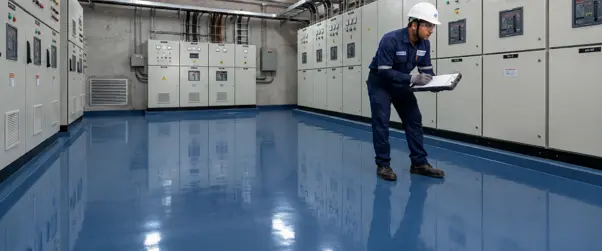
Floorkrete Electrogard is a specialised Dielectric epoxy floor coating for suitable electrical work areas such as suitable switchgear and control-room floors.
It is designed to use a primer that is compatible with the Electrogard dielectric epoxy flooring. The coating is defined as being 100% solid; this should be verified with the current product technical data sheet.
The difference is that Electrogard forms a permanent coated surface, rather than using separate, mobile mats.
Electrical safety flooring is just one of a system of electrical protection, though. Documented dielectric performance, substrate conditions, coating thickness, applicable standards, and the electrical safety procedures at the site are all factors to be considered in product selection.
Electrogard vs Rubber Mats: A Practical Comparison
| Comparison Factor |
Electrograd Dielectric Insulation Coating |
Rubber Insulating Mats |
| Electrical Insulation |
Designed to provide a dielectric insulating barrier when tested and specified for the required electrical conditions. |
Provides electrical insulation when the mat is correctly rated and suitable for the working voltage. |
| Floor Integration |
Applied directly to the prepared floor, creating a bonded insulating surface. |
Provides insulation through separately placed mats. |
| Coverage Continuity |
Can cover the specified floor area, including around fixed equipment, subject to floor geometry and system design. |
Coverage depends on mat dimensions, placement and the gaps between mats. |
| Trip and Movement Risks |
No loose mat edges when properly installed and bonded. |
Edges may create trip hazards if mats curl, shift or become damaged. |
| Space Utilisation |
Can accommodate defined working zones without separate mats occupying the floor surface. |
Mats occupy designated floor areas and may need repositioning when layouts change. |
| Cleaning and Housekeeping |
Compatible smooth finishes can support easier routine floor cleaning. |
Mats may need lifting to inspect and clean the floor beneath them. |
| Maintenance |
Requires coating condition inspections, damage assessment and verification of electrical performance. |
Requires regular inspection for cuts, cracks, wear, contamination and deterioration. |
| Service Life and Cost |
Depends on system performance, substrate condition, installation quality and maintenance. |
Depends on mat quality, operating conditions, inspection and replacement frequency. |
Why Consider Floorkrete Electrogard for Electrical Rooms?
The purpose is designed to provide the protection of dielectric insulation.
Electrogard is targeted towards a different type of flooring from the usual decorative floor; it’s targeted at dielectric epoxy flooring. It is important in selecting Electrical room flooring when the performance of electrical insulation is a design requirement.
Integrated Floor Finish (IDF)
This over-coating is different from the separate type of mats. This can help keep to the desired coverage without needing to regularly re-position the mat as long as the coating is intact and performing its function.
100% solids formulation
The product characteristic “stated 100% solids” is relevant. It is not, however, to be regarded as evidence of a specific dielectric strength, zero emission, or of chemical resistance or service life. There are properties that need suitable technical evidence.
A Two-layer system
The primer and coating arrangement is a specified, rather than a loose, insulation accessory that makes up a flooring system. Compatibility, specified dry-film thickness and the performance of the complete installed system should be verified before selection.
Made in India, with international market potential
Multichem Group is able to showcase the Indian origin of Electrogard and its presence in international markets with verified manufacturing records, export documentation and project references. These are more conclusive than unbacked assertions of global adoption.
Where Can Electrogard Be Considered?
Potential evaluation areas include but are not limited to:
- Switchgears and distribution rooms.
- Electrical control rooms. Identified electrical panel operating areas.
- Any industrial facility with a permanent (static) dielectric insulation floor treatment.
Technical documentation and an electrical safety assessment shall be performed to determine the suitability of Electrogard for any specific voltage class, equipment arrangement or environment in which it is used.
How to Evaluate Dielectric Insulation Flooring for Electrical Safety
When choosing the appropriate Type of Dielectric Insulation Flooring, there are many factors beyond just comparing the coatings or appearance of the flooring surface. The system should exhibit appropriate electrical characteristics under the conditions that are planned to be used, and should be integrated into the electrical safety protection of the facility.
- Dielectric Breakdown Voltage: Discuss the breakdown voltage tested and the conditions for the test. Do not use a single rating for all product grades and installation thicknesses.
- Applicable Test Standards: If applicable to the specified test, check manufacturer’s test reports against relevant standards e.g. ASTM D149 or IEC 60243-1.
- Specified Coating Thickness: Verification of thickness, to verify the electrical performance and to ensure that the installed system complies with the manufacturer’s specification.
- Substrate and System Compatibility: Confirm floor condition, primer compatibility, coating adhesion requirements and complete flooring system compatibility. Operating
- Environment: Take into account moisture, contamination, mechanical wear, cleaning chemicals etc. that might impact the condition of the coating or its electrical properties.
- Inspection & Maintenance: Define a process to ensure surface damage, wear and coating integrity is checked, and electrical testing is performed where needed.
- Qualified Safety Assessment: Let a qualified electrical safety professional evaluate the proposed system to determine its suitability for the site based on voltage exposure, operating procedures and applicable safety requirements.
About Electrogard Dielectric Insulation Coatings
Electrogard ELI is a two-component, epoxy-based dielectric insulation floor coating designed to provide electrical insulation along with a hard-wearing, seamless surface. Its different grades offer varying breakdown voltage ratings to meet specified project requirements.
Electrogard SLI is a single-component, resin-based dielectric insulation coating designed for industrial and commercial applications. It offers a seamless, abrasion-resistant finish and UV resistance, making suitable grades appropriate for specified indoor and outdoor environments.
ElectroScreed is a two-component, epoxy-based dielectric insulation screed designed for applications requiring a thicker floor layer. It combines electrical insulation properties with a self-levelling finish, helping address floor-level variations while providing a durable surface.
Product details and technical documentation are available through the Floorkrete Electrogard product category and the relevant individual product pages.
Conclusion
Selecting between Electrogard dielectric insulation coatings and rubber insulating mats is not simply a matter of preference—it is a functional safety decision driven by operational conditions, equipment layouts, and maintenance protocols.
Rubber insulating mats are a practical choice for flexible or modular installations, while fixed dielectric coatings such as Floorkrete Electrogard provide an integrated insulation solution for permanent flooring systems.. By providing a continuous, high-durability, seamless insulating surface, Electrogard addresses key operational challenges such as mat displacement, edge curling, hidden floor debris, and chemical deterioration.
Facilities seeking to streamline electrical room maintenance, eliminate tripping risks, and implement robust floor-wide dielectric insulation protection should evaluate Electrogard (ELI, SLI, or ElectroScreed) in consultation with certified electrical safety engineers and technical specification sheets.
FAQ