Protecting Micro-Electronics with ESD Epoxy Flooring in High-Tech Manufacturing
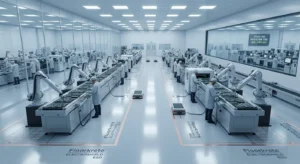
India is witnessing an unprecedented growth in High Tech manufacturing. The global electronics supply chains are creating huge production ecosystems in India, fuelled by the initiatives of the government like Atmanirbhar Bharat and Make in India. Advanced manufacturing is scaling up fast, ranging from mega-campuses creating smartphones and consumer electronics to specialized plants accelerating backend semiconductor packaging, testing, and fabrication.
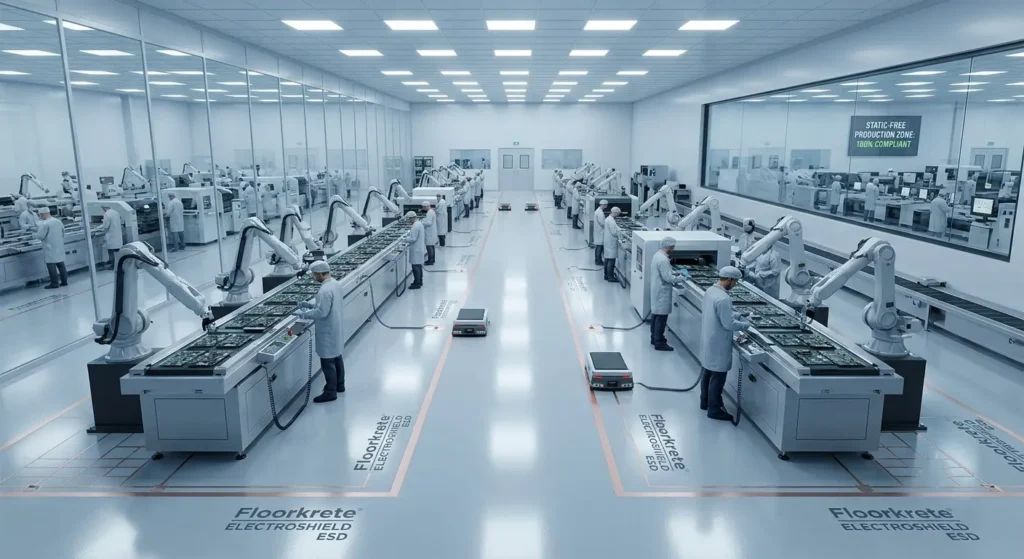
But scaling high tech electronics manufacturing is far more than just the allocation of land, capital and high-speed automated equipment. Absolute environmental control, down to the surface of the floor, is necessary to reach the global yield standards and operate efficiently. Whether in High Tech Assembly Halls, Cleanrooms or Test Labs, a micro-threat, Electrostatic Discharge (ESD) can jeopardize billions of rupees worth of delicate inventory items.
The Physics of ESD: A Microscopic Threat with Massive Costs
In high-speed consumer electronics production lines, and semiconductor factories, movement and automated equipment generates static electricity unceasingly. This is done by the phenomenon of the transfer of electrons that occurs when two materials touch and then part, known as triboelectric charging. One technician strolling across an unconditioned floor or on an ordinary epoxy floor can create thousands of volts of static electricity.
Rarely a human operator experiences a static shock under 3,000 volts, but a micro-component, integrated circuit (IC) or printed circuit board (PCB) can be permanently damaged by static voltage as small as 10 to 100 volts.
Unmanaged static electricity in high-tech facilities introduces two distinct, high-cost operational risks:
1. Catastrophic Direct Failure
High-voltage static sparks melt microscopic metal traces and vaporize internal silicon structures inside microchips, memory modules, and microcontrollers during assembly. The component dies instantly on the production line, causing immediate material scrap and reduced factory yields.
2. Latent Damage (Damage Susceptible Invalidation - DSI)
Latent defects occur when a micro-discharge weakens or partially melts an internal circuit without causing immediate total failure. The affected component passes initial factory Quality Assurance (QA) and Quality Control (QC) checks. However, once deployed in the field inside a customer’s smartphone, automotive electronic control unit (ECU), or medical device, it fails prematurely due to thermal stress or routine electrical loads. Latent failures cause severe brand erosion, sky-rocketing warranty claims, and potential recall liability.
Defining ESD Epoxy Flooring: How the Technology Works
An ESD Epoxy Flooring system is an engineered, multi-layered resinous surface formulated with conductive materials such as carbon fibers, carbon nanotubes, or specialized conductive aggregates.
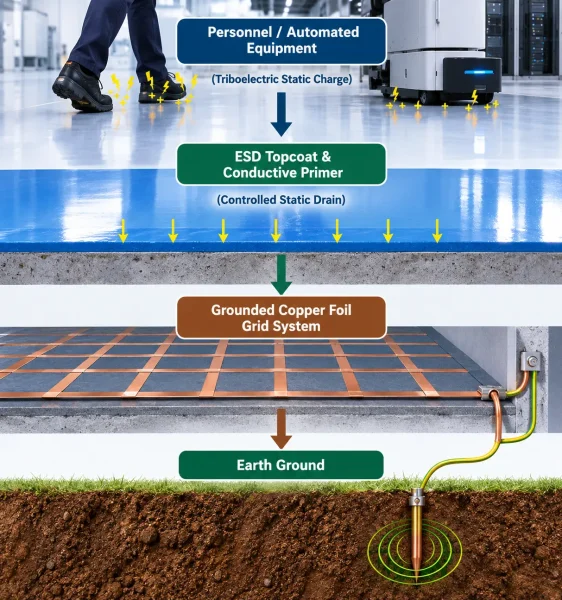
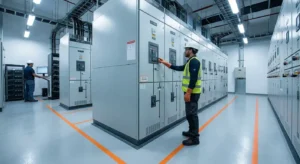
Unlike standard floor coatings that act as electrical insulators, an ESD floor system creates a controlled electrical circuit. It drains accumulated static energy away from personnel, footwear, machinery wheels, and component racks, directing charges safely down through a grounded copper foil grid into the facility’s earth ground.
Surface Resistance Classifications
To address varying operational risk profiles, static control flooring falls into two distinct categories based on electrical resistance, measured in Ohms (Ω):
| Floor Classification | Electrical Resistance Range | Charge Dissipation Profile | Target Facility Application |
|---|
| Static Dissipative Systems | 106 to 109 Ω | Controlled, moderate rate of charge drainage | Smartphone assembly, SMT lines, testing bays, cleanrooms |
| Electrostatic Conductive Systems | 104 to 106 Ω | Very rapid earthing and charge dissipation | Volatile chemical zones, explosive storage, extreme static areas |
- Static Dissipative Flooring (10⁶ to 10⁹ Ω) is the industry standard for most electronics hardware assembly. Draining static charges at a controlled pace prevents sudden, high-current discharge spikes that could harm ultra-sensitive logic chips while ensuring personnel safety.
Global Compliance Standards: ANSI/ESD S20.20 and IEC 61340-5-1
Building an export-ready electronics manufacturing hub requires meeting international static control standards. Overseas OEMs, telecom leaders, and semiconductor clients inspect flooring systems for strict compliance:
- ANSI/ESD S20.20: The standard established by the Electrostatic Discharge Association for protecting electrical and electronic parts, assemblies, and equipment. It defines strict limits for system resistance and Body Voltage Generation (BVG) when operators walk wearing ESD footwear.
- IEC 61340-5-1: The International Electrotechnical Commission standard governing electrostatic management in manufacturing environments. It outlines requirements for surface resistance, point-to-point resistance, and point-to-ground testing.
- ISO Cleanroom Standards (ISO 14644): High-tech flooring must remain joint-free and monolithic. Eliminating grout lines, seams, and micro-cracks prevents concrete dusting and particulate contamination that could compromise semiconductor packaging and SMT printing.
Beyond Static: Structural and Mechanical Requirements in Mega-Factories
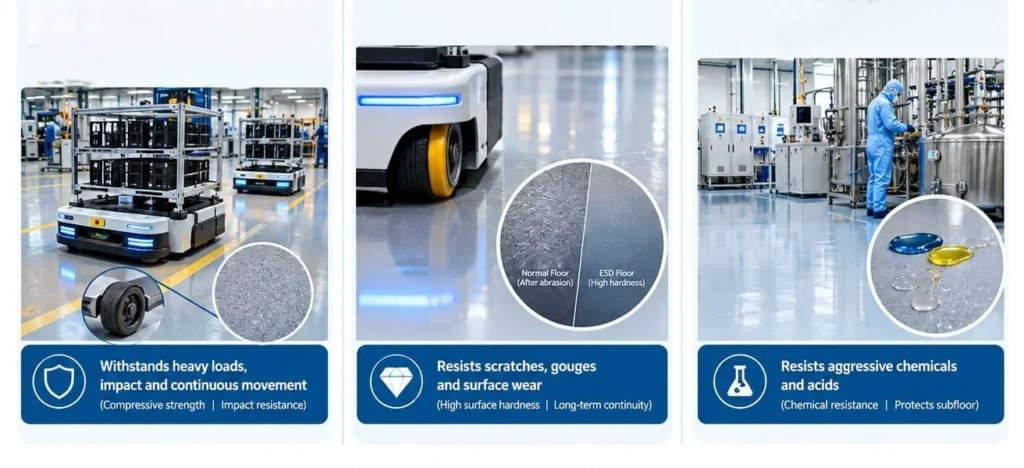
While static control is paramount, ESD flooring in a 24/7 high-tech facility must also withstand extreme physical and chemical stress.
1. Heavy AGV and Forklift Traffic
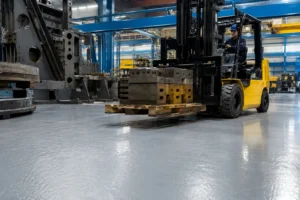
The use of Automated Guided Vehicles (AGVs) and mobile material handling robots has become crucial in modern electronics campuses. Dynamic stress is faced constantly due to continuous rolling loads, hard polyurethane wheels and heavy component racks. ESD epoxy systems have excellent impact resistance and compressive strength, ensuring that the surface will not crack, spall or delaminate during years of continuous use.
2. Abrasion and Micro-Gouge Resistance
Line degradation or surface gouging will cause an interruption in the electrical current. The surface is extremely hard, resisting scratching and micro gogging, which makes the movement of the AGV smooth and prevents the formation of static dead spots in the thousands of square meters.
3. Chemical and Acid Resistance
Solvents, processing acids, battery testing and cleaning chemicals are used in component processing, PCB etching areas and battery test bays which effectively bring the floors into contact with these aggressive chemicals. For special chemical resistance, high-performance ESD floor systems based on Novolac modified epoxy or polyurethane systems will keep the structural subfloor intact so that it remains consistent.
Key Financial Advantages of ESD Epoxy Systems
Investing in premium ESD epoxy flooring delivers direct financial benefits across the manufacturing lifecycle:
- Higher First-Pass Yield (FPY): With the reduction of static induced micro-damage, higher yield loss will be avoided in functional circuit testing.
- Reduced Field Return Rates: Mitigating latent defects gives a brand a good reputation and minimises global warranty, repair and replacement costs.
- Seamless Maintenance: Monolithic resin coatings are non-porous, and easy to sanitize, reducing maintenance downtime and helping to meet ISO cleanroom standards.
- Long-Term Electrical Continuity: ESD systems that are engineered prevent the creation of “dead spots” over time across the entire facility footprint.
Conclusion: Securing Quality in Electronics Manufacturing
As India cements its position as a global electronics manufacturing power, facilities must build to world-class environmental standards. Protecting cleanrooms, SMT assembly lines, and testing hubs with engineered ESD epoxy flooring safeguards sensitive micro-components against microscopic threats. Selecting a system with verified electrical continuity, high mechanical durability, and chemical resistance ensures operational reliability, high production yields, and complete global compliance.
Floorkrete offers a comprehensive range of high-performance ElectroShield ESD flooring solutions Electroshield specifically engineered to meet these rigorous operational demands. Designed to control surface resistance across critical production zones, the ElectroShield series provides both static dissipative (10⁶ to 10⁹ Ω) and conductive (104 to 10⁶ Ω) systems integrated with grounded copper foil grids to safely channel static charges away from sensitive micro-components.
By combining continuous electrical continuity with superior compressive strength, seamless cleanroom compatibility, and chemical durability, Floorkrete enables high-tech manufacturing facilities to maintain optimal yield rates and achieve complete global compliance.
Electroshield Product Range:
ElectroShield ULC 5416– Electrostatic Conductive, 2 Pack Self Smoothing Polyurethane based Topping. Surface to Ground Resistance: 104 to 10⁶ Ω
ElectroShield ELC-5407– 3-Part Electrostatic Conductive Self Smoothing Epoxy Floor Coating. Electrical Resistance: 10³ to 10⁶ Ω
ElectroShield ELD-5406– Electrostatic Dissipating Self Levelling Epoxy Floor Coating. Surface
to Ground Resistance: 10⁶ to 10⁹ Ω
ElectroShield ETC5400 Primer– Electrostatic Charge Conductive Epoxy Primer. Electrical Resistance: 10³ to 10⁶ Ω
ElectroShield ULD-5411– Electrostatic Dissipating Self Levelling PU Floor Coating. Surface to Ground Resistance: 10⁶ to 10⁹ Ω
FAQ