Understanding Dielectric Insulation Flooring for Electrical Safety
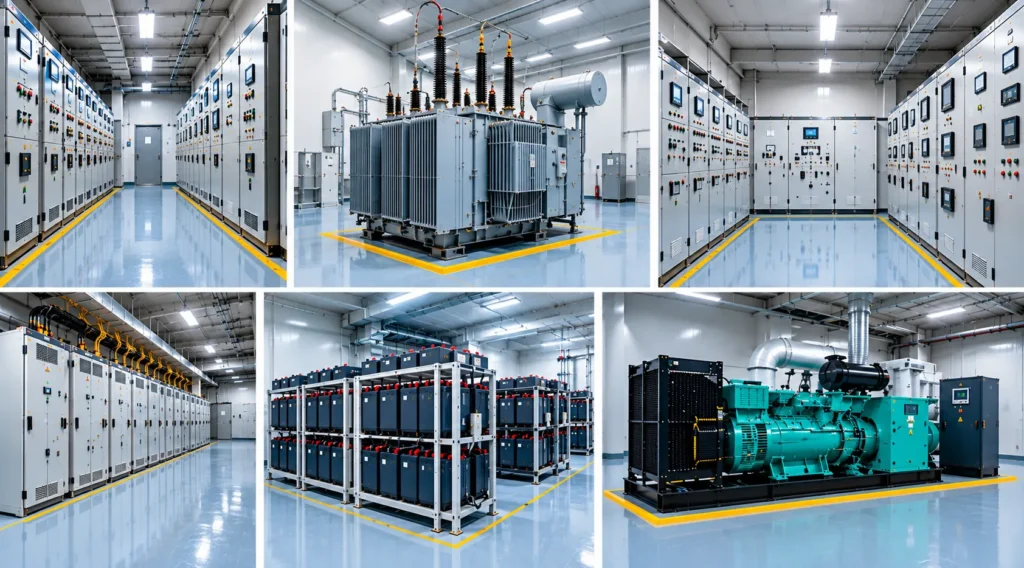
Contemporary industrial and power electrical installations are highly dependent on power distribution and control systems, which range from control panels, switchgear, substations, transformer areas, electrical rooms, to battery rooms. These spaces demand specialized flooring systems which not only offer electrical insulation, but must also resist mechanical traffic, chemical exposure and daily demands.
By providing a high resistance barrier between people, equipment and the concrete surface beneath, dielectric insulation flooring helps minimize the potential hazards of accidental electrical current flow through the floor.
The Science behind Dielectric Insulation Flooring?
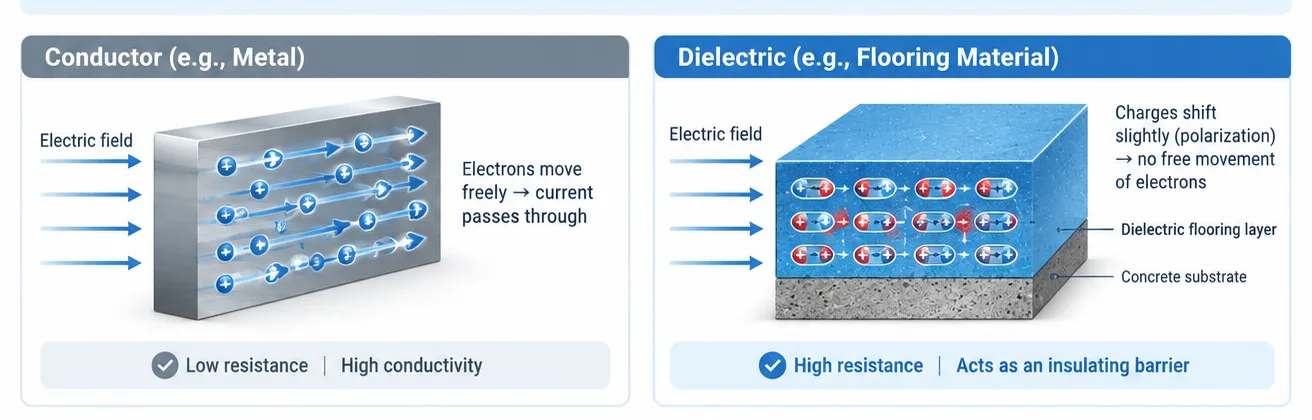
A dielectric is a material that has very low electrical conductivity and can withstand an electric field without allowing significant electrical current to pass through it.
Unlike a conductor, where electrons can move relatively easily, a dielectric material strongly restricts the movement of electrical charge.
When a dielectric insulation material is exposed to an electric field, its molecular charges shift slightly, a phenomenon known as polarization. Unlike a conductor, these charges cannot move freely through the material.
This allows the dielectric insulation flooring to withstand an electric field while restricting current flow. In flooring, this property enables the material to act as an electrically resistant insulating barrier.
A layer of high resistance can be formed between the Personnel and the under-floor structure by a Dielectric Flooring System
The objective is not to carry electrical current through the flooring. Instead, the flooring is engineered to restrict current flow.
Working Mechanics of Dielectric Insulation Flooring?
Now, imagine a floor made on top of a concrete foundation. Concrete may contain moisture, salts, minerals, reinforcement and other materials that affect the electrical properties of the concrete.
Adding a highly insulating dielectric layer between the working surface and the underlying material will result in a significant increase in electrical resistance for this path.
In simplified terms:
Electrical potential → Dielectric Insulation flooring → High resistance → Restricted current flow
Electrical performance will vary depending on the flooring formulation, thickness, condition of the substrate, moisture, temperature, contamination and other environmental conditions.
Thus, always verify the dielectric performance by appropriate testing under the anticipated operating conditions.
Key Properties of Dielectric Insulation Flooring
- High Electrical Resistance
- Mechanical Durability
- Chemical Resistance
- Abrasion Resistance
- Surface Integrity
- Easy Maintenance
Applications of Dielectric Insulation Flooring
Electrical Infrastructure:
Control rooms • Switchgear rooms • Substations • Transformer rooms • Panel rooms • Power distribution rooms
Specialized Electrical Areas:
Battery rooms • Generator/DG rooms • Electrical testing laboratories • Electrical maintenance areas
Why Dielectric Flooring Is Different from Conventional Industrial Flooring
Conventional industrial flooring generally focuses on physical performance:
- Wear resistance
- Impact resistance
- Chemical resistance
- Easy cleaning
- Mechanical strength
- Long service life
Dielectric flooring adds another dimension: Electrical Insulation.
The floor is required not only to survive the physical demands of the facility but also to provide a controlled level of electrical insulation.
This makes dielectric insulation flooring a specialized engineering material rather than simply a decorative or protective floor coating.
Conclusion
With an engineered dielectric flooring system, manufacturers can incorporate high electrical resistance into a mechanical, chemical, abrasion and long-term surface integrity, providing a flooring solution customized to meet the specific requirements of electrically sensitive production floors.
Floorkrete Dielectric Insulation Flooring Systems
To meet the rigorous needs of today’s electronics manufacturing, Floorkrete provides special flooring solutions for dielectric insulation that provide the required electrical insulating properties, as well as heavy-duty industrial performance.
Key Performance Highlights of Floorkrete Electrogard:
- Exceptional Electrical Insulation: Formulated specifically to prevent electrical current from passing through workers to earth ground during accidental high-voltage contact. (Electrogard Exposil)
- Monolithic & Continuous Surface: Provides a joint-free protective layer that maintains continuous insulation across entire power control bays. (Electrogard ELI)
- High Mechanical & Load Resistance: Built to handle heavy equipment loads, tool drops, cart traffic, and mechanical wear without cracking or spalling. (Electroscreed)
- Chemical & Abrasion Resistance: Resists transformer oil, acids, cleaning solvents, and industrial wear while retaining surface durability. (Electrogard SLI)
FAQ